

Preserving South America’s Majestic Big Cats: Conservation Efforts
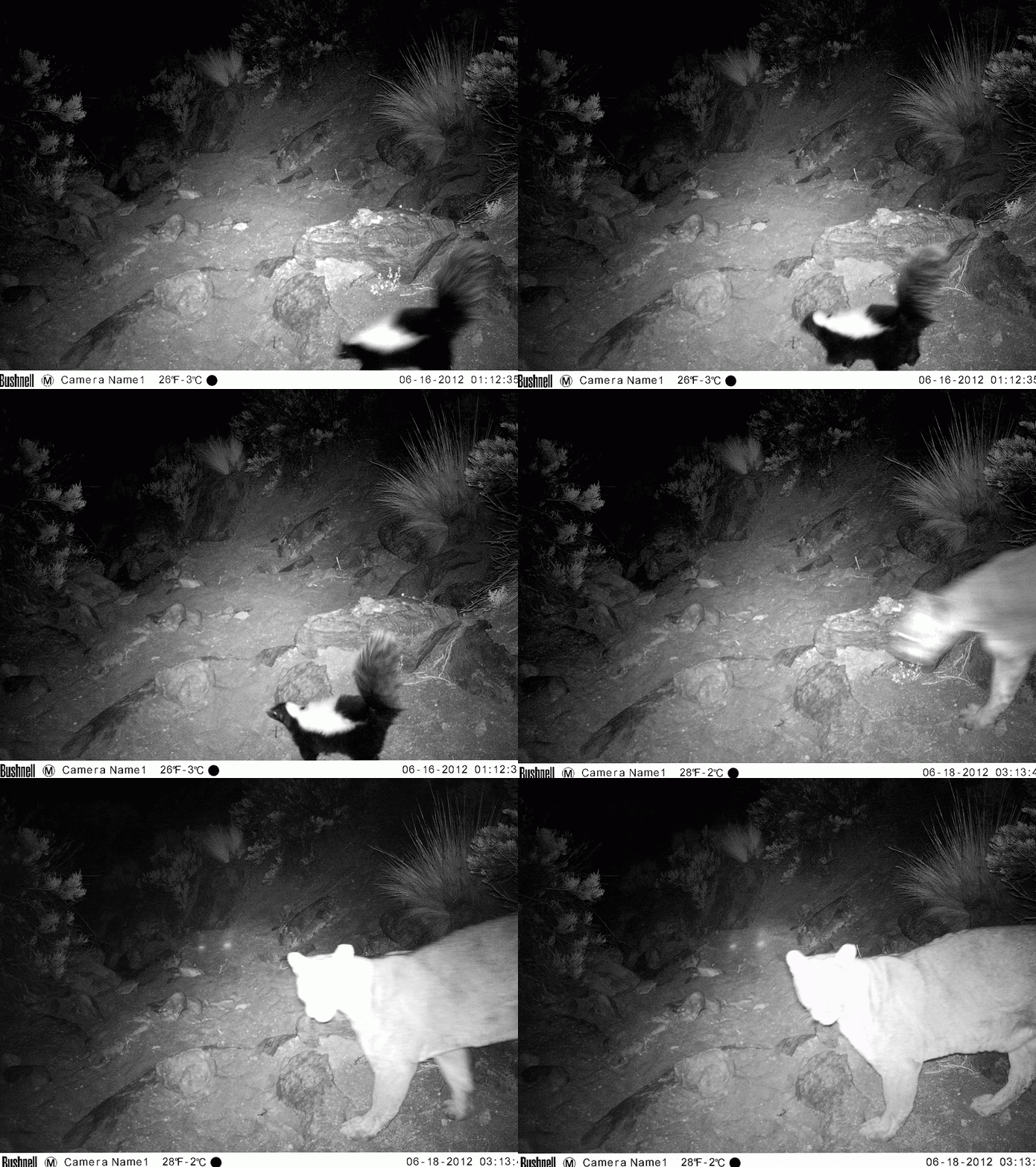
The big cats in Latin America present a series of socio-ecological conflicts related to land use and compatibility with human communities. From human disruption through tourism to the impact on livestock, the following list includes publications and projects in which this laboratory has contributed to the conservation of Pumas and Jaguars in Latin America.
Click below:
RESEARCH & PROJECTS
2020 | Puma and jaguar in Latin America: Valuing biodiversity and understanding socioecological systems. The project was carried out within the framework of objective number 15 for sustainable development promoted by the United Nations. Co-investigator. |
| 2014 | Puma population ecology in the Andes of the altiplano. Ministry of Agriculture |
| 2013 | Ecology and relationship between man and Puma concolor in Alto Cachapoal. Fund for Scientific Research Cachapoal, Pacific Hydro Chile. |
| PROJECTS | (1) Conflict resolution between puma and livestock farming in Volcán Isluga National Park. (2) The effect of tourism on pumas in Torres del Paine National Park. |
The altiplano of Tarapacá is a unique ecosystem that harbors local communities and a little-known biodiversity. In this environment, the puma, a predator adapted to extreme conditions, coexists with livestock farming and mining activities. The following book compiles two years of research conducted by Fauna Australis from The Pontificia Universidad Católica de Chile and the Agricultural and Livestock Service of Tarapacá, with the support of international specialists. The aim is to present in an accessible way the results on the ecology of the puma and the life of local inhabitants, so that Chilean society values this ecosystem and its wildlife.
 Fauna Australis